Kettlebells
Kettlebells are compact cast-iron or steel weights with a handle, used for exercises that combine strength, power and cardiovascular conditioning. Their offset centre of gravity engages stabilising muscles more than some traditional free-weight movements.
Common Exercises
- Kettlebell swing — primarily targets glutes, hamstrings and core
- Goblet squat — lower body with an upright torso position
- Turkish get-up — full-body movement developing stability and coordination
- Single-arm press — shoulder and core strength
Selection Considerations
- Starting weight: Commonly 8–12 kg for women and 12–16 kg for men beginning kettlebell training. A qualified instructor can help identify appropriate loads.
- Handle finish: Smooth powder-coated handles reduce friction during high-repetition sets. Textured handles offer grip in humid conditions.
- Competition vs. classic: Competition bells are uniform in size regardless of weight; classic bells increase in size with weight.
Resistance Bands
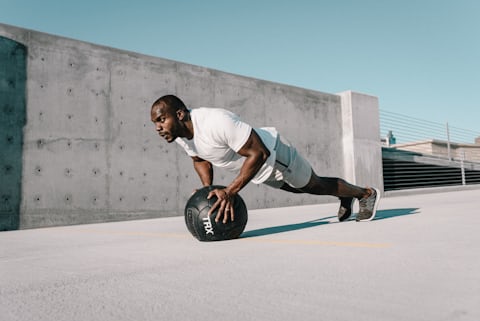
Resistance bands provide variable resistance throughout a movement's range of motion. They are lightweight, portable and relatively affordable, making them practical for home training, travel or rehabilitation work.
Types
- Loop bands (power bands): Large closed loops used for pull-up assistance, banded deadlifts and warm-up activation.
- Mini bands (hip circles): Small loops for glute activation, lateral walks and knee stability drills.
- Tube bands with handles: Mimic cable-machine movements at home — rows, presses, curls.
- Flat therapy bands: Used in physiotherapy and gentle rehabilitation exercises.
Care and Safety
- Inspect bands before each use for nicks, tears or loss of elasticity.
- Store away from direct sunlight and sharp edges.
- Replace damaged bands immediately — a snapped band can cause injury.
Exercise Mats
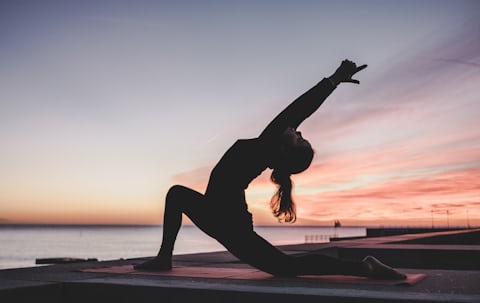
An exercise mat provides cushioning for floor-based work and creates a designated training space. The right mat depends on your primary activity.
| Feature | Yoga Mat | Fitness / Exercise Mat |
|---|---|---|
| Thickness | 3–5 mm | 8–15 mm |
| Primary benefit | Grip and ground contact for balance | Joint cushioning for kneeling and lying |
| Weight | Lighter (~1–2 kg) | Heavier (~2–4 kg) |
| Best for | Yoga, Pilates, balance work | HIIT, core exercises, stretching |
Material Options
- PVC: Durable, easy to clean, budget-friendly. Not biodegradable.
- TPE (thermoplastic elastomer): More environmentally friendly, latex-free, good cushioning.
- Natural rubber: Excellent grip, heavier, may have a natural odour initially.
- Cork: Antimicrobial surface, sustainable material, good grip when wet.
Equipment Quick Reference
| Equipment | Primary Use | Space Needed | Approx. Cost (AUD) |
|---|---|---|---|
| Kettlebell (single) | Strength, power, conditioning | Minimal | $30–$120 |
| Resistance band set | Strength, rehab, warm-up | Minimal | $20–$60 |
| Exercise mat | Floor work, stretching | ~180 × 60 cm | $20–$80 |
| Adjustable dumbbells (pair) | Full-body strength | Small shelf | $100–$400 |
| Pull-up bar (doorframe) | Upper body pulling | Doorframe | $25–$65 |
| Foam roller | Self-myofascial release | Minimal | $15–$50 |
| Skipping rope | Cardio, coordination | Moderate (ceiling height) | $10–$40 |
| Stability ball | Core, balance | Moderate | $20–$55 |
Budget perspective: Effective training does not require expensive equipment. Bodyweight exercises combined with a mat and resistance bands cover most fitness goals for beginners. Add equipment progressively as your needs develop.